

How to plan, execute, and operationalise 400G+ performance validation with realistic traffic and SLAs.
From 100G to 400G+: bandwidth, latency, buffers and microbursts
Australian enterprises and service providers are rapidly moving from 100G to 400G and charting paths to 800G. The jump is not just about more lanes and optics; it fundamentally changes how congestion, queuing, and latency manifest under real workloads.
As line‑rates grow, buffers shrink relative to offered load, retransmission penalties rise, and small imperfections snowball into application pain. A 200‑microsecond hiccup might be inconsequential at 1G, yet translate into measurable tail latency at 400G - enough to impact AI training clusters, real‑time trading, or east‑west microservices.
High‑performance validation must therefore look beyond headline throughput and measure latency distribution, microbursts, packet loss under incast, and fairness across flows and classes.
Benchmarking guidance such as RFC 2544 remains useful for device‑level characterisation, but modern networks also benefit from applicability guidance like RFC 6815, which cautions against using synthetic tests as the sole indicator of service quality.
In parallel, TCP‑level characterisation using RFC 6349 helps reveal window scaling, MSS/MTU, and impairment interactions that pure Layer 2/3 tests miss. Finally, microburst visibility matters: transient milliseconds of oversubscription can starve queues and trigger head‑of‑line blocking.
Tools and visibility platforms that detect sub‑second spikes - see Gigamon’s description of microbursts - should be part of your playbook when moving to 400G+. Bringing these elements together creates a more truthful picture of readiness than any single benchmark can provide.
Building realistic test profiles for modern data centre fabrics
Realism is the currency of credible performance testing. To validate 400G fabrics, emulate traffic the way your production behaves. That means mixing elephant and mice flows, fan‑in/fan‑out patterns, and a blend of protocols (HTTP/2, gRPC, Kafka) across QoS classes.
Burstiness should reflect your application peaks: backup windows, AI data ingestion, or billing cycles. Include congestion scenarios like PFC (priority flow control) interactions, ECN marking, and RED/WRED thresholds to see how queues respond when pressure mounts. Aim for sustained loads near 70–90% utilisation with superimposed spikes rather than only “flat line” saturations - this exposes fairness and headroom. Where possible, validate at optic form factors and speeds you intend to deploy (QSFP‑DD, 4x100G breakouts, 2x200G).
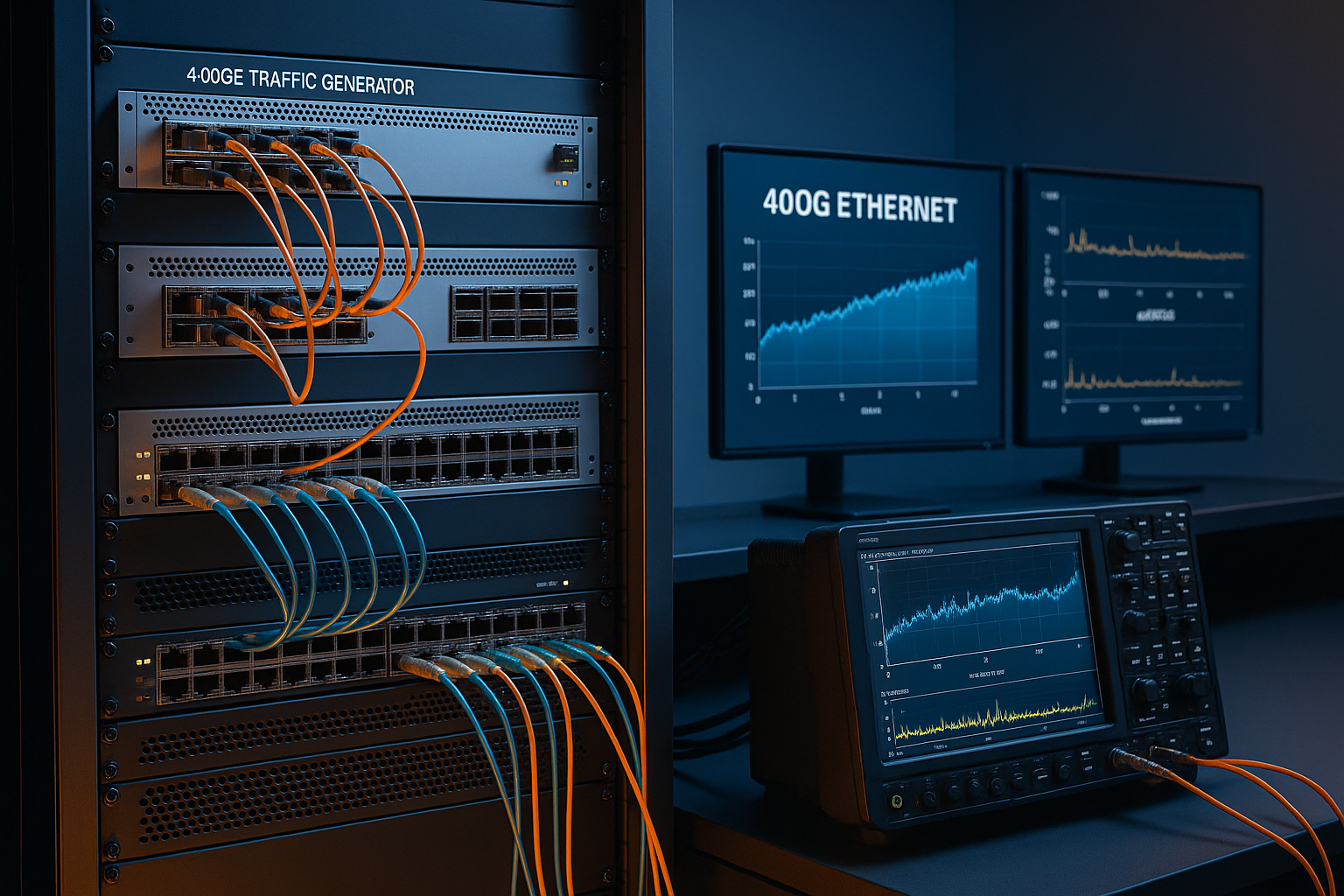
Leading vendors provide purpose‑built 400GE generators and analysers - see Viavi's high‑speed portfolio showcased in their 400G updates. Test mixes should include:
(1) RFC 2544‑style throughput, latency, and frame loss across multiple frame sizes;
(2) service activation/turn‑up profiles (parallel multi‑service flows) aligned to Y.1564 principles;
(3) TCP throughput per RFC 6349 including BDP sizing and window validation; and
(4) application proxies (transaction per second, p95/p99 latency, error rates).
Don’t forget negative testing: flap links, inject CRC/bit errors, vary MTU, and simulate microbursts to map failure domains and recovery times. In short, build a catalogue of reusable, parameterised scenarios that mirror production, not laboratory perfection.
Turning lab results into SLAs and ongoing performance assurance
Test results have limited value unless they translate into clear deployment decisions, SLAs, and ongoing assurance. Start by turning metrics into policies: for each traffic class, define throughput targets, latency SLOs (p50/p95/p99), and tolerance for frame loss or retransmissions under specified load.
Document applicability boundaries as per RFC 6815 so stakeholders understand what the numbers do and do not prove. Use TCP insights from RFC 6349 to set MSS, window scaling, and buffer sizing defaults across hosts and middleboxes.
Next, operationalise your tests: schedule periodic “assurance runs” during maintenance windows, and embed lightweight synthetic probes for continuous watch on latency, loss, and jitter in production.
Vendor solutions can help automate lab orchestration and CI/CD alignment. Finally, close the loop with observability: surface microbursts and queue health in dashboards, correlating test baselines with real traffic using visibility platforms (e.g., the microburst concept).
When test artefacts (scripts, configs, results) and production telemetry live together, teams can triage incidents faster, justify capacity upgrades with evidence, and keep 400G deployments resilient and cost‑effective.